
Understanding APR on Car Loans: What the Fine Print Isn’t Telling You
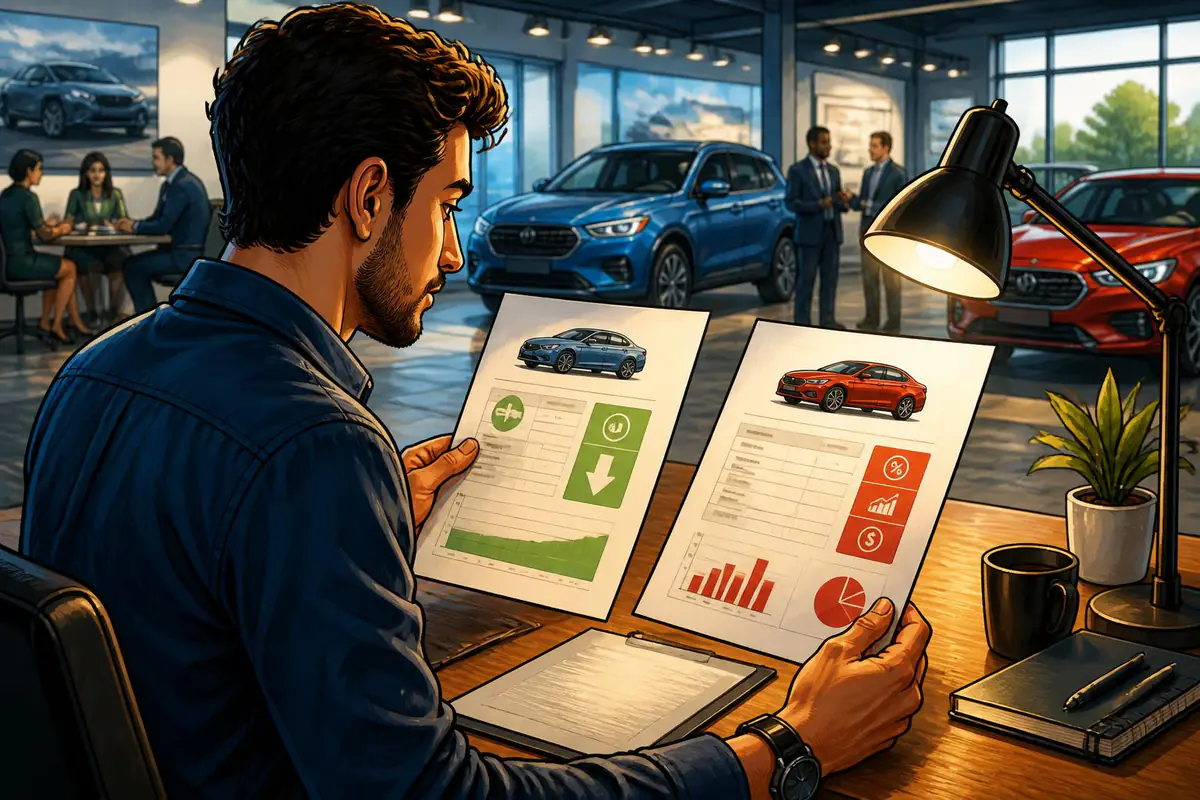
When you walk into a dealership or apply for a car loan online, one number is pushed harder than any other: the APR. It looks simple, it sounds official, and it feels like the only thing you need to compare deals. But the fine print behind car loan APR can hide costs, tricks, and traps that quietly drain your money over time.
Learning how APR really works on auto loans can help you avoid overpaying, negotiate with confidence, and choose financing that actually fits your life instead of just your monthly budget.
What APR Really Means on a Car Loan
APR stands for Annual Percentage Rate. In theory, it’s the total yearly cost of borrowing money, expressed as a percentage, including interest and certain fees. On car loans, lenders use APR so borrowers can compare different offers more easily.
But here’s the catch: APR on car financing is not always as straightforward as it appears. Not every fee is included, and different lenders can calculate APR slightly differently. So two loans with the same APR can still end up costing you different amounts.
In simple terms, your APR is built from:
- The interest rate charged by the lender
- Some upfront loan-related fees (for example, origination fees)
- The length of your loan term (36, 60, 72 months, etc.)
What it usually does not include: things like sales tax on the car, extended warranties, service contracts, and add-ons that get bundled into what you’re financing. Those extras don’t raise your APR directly, but they increase the amount you borrow, which increases your total interest cost.
The Difference Between APR and Interest Rate
Many advertisements flash an impressively low number, but what you see is often the base interest rate only, not the APR. The interest rate is the cost of borrowing before adding required loan fees. The APR attempts to fold those fees into a single yearly percentage.
Here’s why this matters: you might see one offer with a 4.5% interest rate and another with 4.9%, and assume the 4.5% is better. But if the 4.5% loan has high upfront fees and the 4.9% loan has very low or no fees, the higher interest rate with fewer fees might actually cost less over the life of the loan.
Always ask specifically: "Is that the APR or just the rate?" Then request a loan disclosure that shows total amount financed, total finance charges, and the APR in writing.
How Loan Term Quietly Changes the Cost of APR
Dealers and lenders often focus on your monthly payment: "What monthly number do you need?" This is where long loan terms come in. Stretching a loan from 48 to 72 or even 84 months can make the payment look comfortable – but the total cost quietly balloons.
With a longer term:
- You pay interest for more years, so total interest paid increases dramatically
- Your car can lose value faster than you pay the loan down
- You risk being "upside down" (owing more than the car is worth)
APR on paper might look acceptable, but over 7 years instead of 4, that same APR can drain thousands more from your wallet. Always check two numbers: the monthly payment, and the total of all payments over the life of the loan.
The Fine Print Tricks You Need to Watch For
Lenders and dealerships are not always transparent about how they arrive at your APR. Here are common ways the fine print works against you and how to protect yourself.
Hidden Add-Ons Rolled into the Loan
Extended warranties, gap insurance, fabric protection, wheel and tire packages, and service contracts often get quietly rolled into your financing. The salesperson may present them as small monthly increases, but over a long term loan, these "small" extras can become very expensive.
When add-ons are financed, you’re paying interest on them for years. That means your real cost is much higher than the sticker price of the add-on. The APR doesn’t always reflect the impact of voluntary extras because they’re treated as part of the amount financed.
To protect yourself, ask for:
- An itemized breakdown of every product included in your payment
- The cash price and the financed price of each add-on
- The total you will pay over time if it’s financed
Dealer Markups on Interest Rates
Many car loans are actually funded by banks or financing companies, not the dealership itself. The lender might approve you for a 6% interest rate, but the dealer is allowed to mark it up to 8% and keep the 2% difference as profit.
This markup is legal in many places, but it’s rarely explained clearly. You think you’re getting the best rate available, when in reality you’re paying extra simply because you didn’t know you could negotiate it.
Practical ways to reduce this risk:
First, get a pre-approval from your bank or credit union before visiting the dealership. A pre-approval with a solid rate gives you leverage. You can say, "I already have financing at this lower rate. Can you beat it?"
Second, always negotiate the price of the car separately from the financing. If a dealer mixes the two conversations, it becomes easier to hide a bad loan behind a decent monthly payment.
Comparing Two Loans: A Simple Example
To see why looking beyond APR matters, imagine these two offers for the same car:
| Loan Feature | Loan A | Loan B |
|---|---|---|
| APR | 5.0% | 5.3% |
| Term | 48 months | 72 months |
| Monthly Payment | Higher | Lower |
| Total Paid Over Term | Much lower | Significantly higher |
Someone focused only on APR and monthly payment might choose Loan B because it seems easier month to month. But over six years instead of four, they pay far more in interest, even though the APR is only slightly higher.
The key question is not just "Can I afford the payment?" but "How much will this car truly cost me in total?"
Steps to Get a Fair, Transparent Car Loan
You don’t need to be a finance expert to protect yourself. A few practical steps can dramatically increase your odds of getting a sane, transparent loan.
Before you shop for a car:
Check your credit report and score. A stronger credit profile gives you access to lower APRs. If possible, take a few months to pay down high-interest debts and correct any errors on your report. Even a small bump in your score can lower your car loan APR significantly.
Then, get pre-approved by a bank or credit union. These institutions often offer more straightforward, less inflated rates than dealerships. With pre-approval in hand, you walk into the dealership knowing roughly what you qualify for.
At the dealership or lender:
Negotiate the price of the car first, as if you were paying cash. Only after you have an agreed price should you discuss financing. This helps prevent the lender from inflating the car price to be able to "give" you a better-looking APR.
Ask the finance manager for a clear printout showing:
- The APR and the base interest rate
- Each fee that’s included to calculate the APR
- Every add-on bundled into the amount financed
- Total amount you will pay over the life of the loan
Do not hesitate to say no to extras. If you want a warranty or gap coverage, you can often shop for these products separately and pay far less than the dealer’s financed price.
Using APR as a Tool, Not a Trap
APR is not your enemy. It’s a tool – but only when you understand what’s inside it. The goal is not simply to chase the lowest possible APR at any cost. The goal is to find a balance where:
You pay a fair price for the car, you keep the loan term as short as your budget reasonably allows, and you avoid unnecessary extras that quietly inflate what you owe. When those pieces line up, the APR number will finally mean what you thought it did the first time you saw it: a clear picture of what borrowing really costs you.
By slowing down, asking questions, and insisting on transparency, you turn financing from something that happens to you into something you actively control. And that’s when a car loan stops being a burden and becomes just another deliberate step in your larger financial life.